
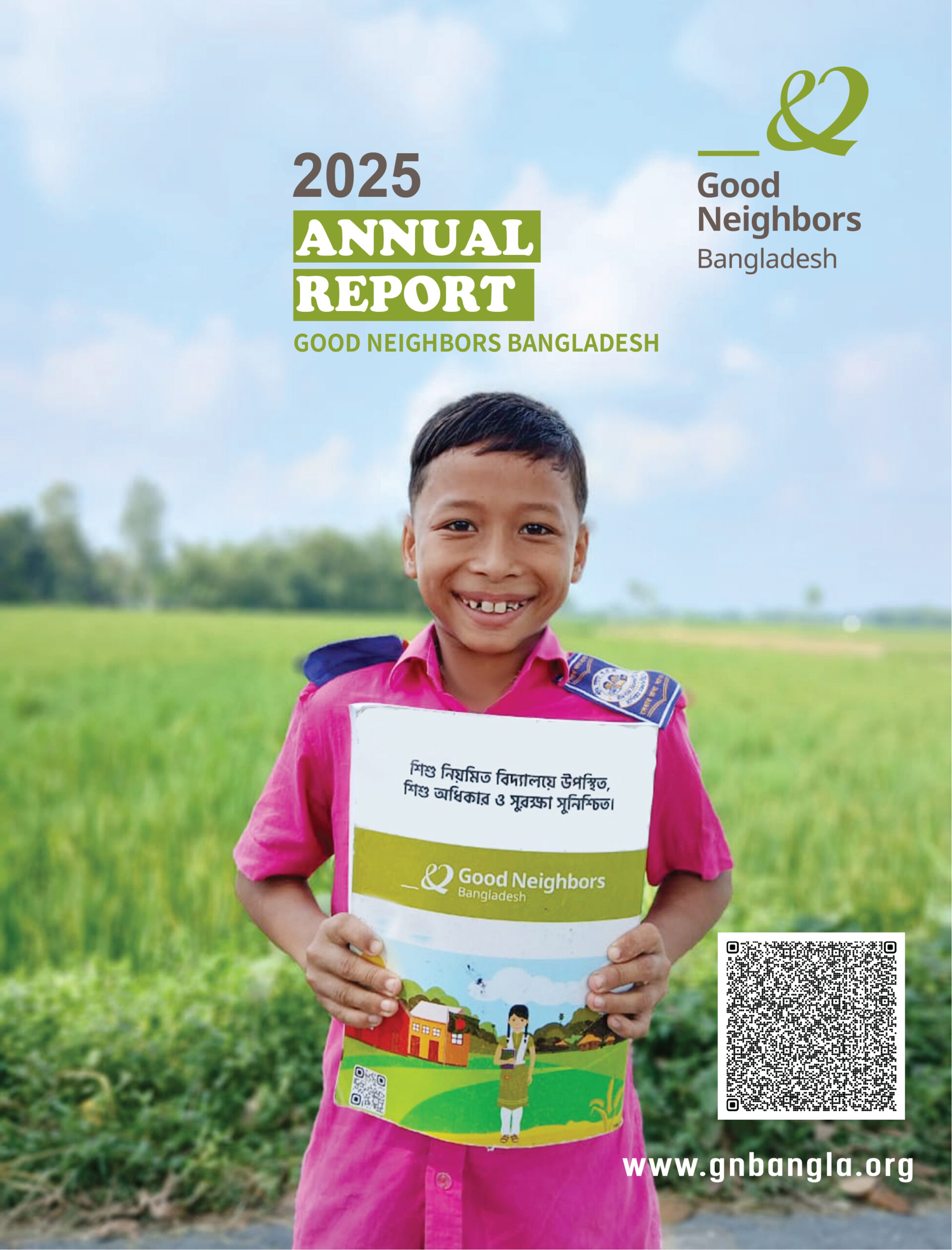
2025 GNB Annual Report
-
by
 GN Bangla
2025 marked a significant milestone in the journey of Good Neighbors Bangladesh, representing a year of bold progress toward self-reliance and sustainable impact. Amid resource constraints, the organization prioritized efficiency, strengthened fundraising mechanisms, and expanded sustainable initiatives to maximize outcomes for vulnerable communities. Alongside long-term development efforts, several key programs were opened directly to public engagement, reinforcing transparency and collective ownership in development. Through integrated interventions in education, health, protection, and livelihoods, Good Neighbors Bangladesh reached approximately 0.38 million people across 17 working areas in 13 districts, while successfully implementing education, income-generation, advocacy, and partnership activities throughout the year.
Education remained a cornerstone of impact in 2025, with initiatives implemented through 6 Good Neighbors schools and 360 partner schools, focusing on learning materials distribution, teacher capacity development, and co-curricular activities to promote inclusive and effective learning environments. Under the UNESCO–Hamdan Project, more than 200 teachers from 96 schools received specialized training to strengthen quality education delivery, complemented by Idea Fairs and joint teacher-parent-student seminars that fostered innovation and collective responsibility. The 12th Samsung Village Project expanded access to quality education for over 2,000 students in Dhaka, while digital library development and reading clubs in remote areas enabled more than 1,200 students to access modern learning resources. National academic engagement was further strengthened through the Word Master Competition, engaging over 12,000 students from 536 schools, alongside global exposure achieved through the Global Youth Network Program, where students received international recognition for their policy contributions.
In the health sector, Good Neighbors Bangladesh continued to expand essential services, reaching over 20,000 people through 17 healthcare units. Nutritional support was provided to more than 45,000 children, ensuring healthy growth and development. Nearly 300 community health workers delivered door-to-door services and critical health messages, while 30 specialized health campaigns, supported by 65 specialist doctors, served nearly 4,000 individuals. Through the Better Life for Girls Project, awareness of menstrual hygiene management among schoolgirls increased dramatically—from 29.7% to 95.1%—with school attendance during menstruation rising from 72.3% to 93.5%. Additionally, safe drinking water initiatives supported by the Embassy of Japan enabled over 2,000 people in coastal areas to access clean water through newly established water collection points.
Women’s empowerment and livelihood development remained central to sustainable change, engaging more than 40,000 women through income-generating activities and leadership development initiatives. Through 26 women-led cooperatives, members strengthened economic independence, participated in decision-making processes, and established resilient livelihood systems. These efforts received recognition at district, upazila, and divisional levels, with 11 cooperative members honored with the “Indomitable Women” Award. To amplify women’s voices and achievements, Good Neighbors Bangladesh published “Prosperity Through Cooperation: Stories of Success,” featuring inspiring narratives of 21 resilient women, serving as a source of motivation for future generations.
Child protection, youth engagement, and community participation were strengthened through advocacy and collective action. In 2025, child rights campaigns engaged nearly 12,000 community members, enhancing awareness and accountability at the grassroots level. Regular social issue meetings and the active involvement of Child Councils contributed to child marriage prevention and child rights protection. Youth development initiatives, including environmental action campaigns at Kuakata Sea Beach, highlighted young people’s leadership in promoting environmental awareness and social responsibility. Sponsorship programs were expanded locally alongside international efforts, enabling 406 children to receive continued care and support. Mental well-being initiatives further strengthened community capacity, engaging nearly 3,000 participants in awareness and training activities.
Environmental protection and disaster resilience initiatives addressed growing climate vulnerabilities, particularly in coastal regions. Youth-led afforestation programs promoted household greening, food security, and ecosystem protection through the distribution of fruit-bearing saplings and planting materials. Mangrove plantations along roadsides and embankments strengthened natural defenses against climate risks, supported by follow-up interventions to ensure healthy growth. In Kalapara, Patuakhali, disaster preparedness efforts included the construction of women-friendly, multi-purpose cyclone shelters, the renovation of existing facilities, the formation of disaster management committees, and the strengthening of early warning systems—collectively enhancing community resilience and safety.
Protection of women and adolescent girls remained a priority, particularly in Rohingya camps and host communities in Cox’s Bazar, where women-friendly spaces and safe spaces provided psychosocial support, awareness-raising, and skills development services. These initiatives supported thousands of women and girls, fostering confidence, safety, and inclusion in highly vulnerable contexts.
The achievements of 2025 were made possible through strong collaboration and shared commitment. Good Neighbors Bangladesh extends sincere gratitude to the NGO Affairs Bureau, development partners, supporters, and the communities themselves for their continued trust and cooperation. With this collective support, the organization successfully implemented a USD 4.4 million budget, reinforcing its commitment to transparency, accountability, and lasting impact. Together, Good Neighbors Bangladesh continues to advance its mission of supporting every child’s dream and building resilient, empowered communities.