
Three Decades of Good Neighbors Bangladesh: From Relief to Sustainable Development
18 August is more than an anniversary for Good Neighbors Bangladesh (GNB). It is a celebration of a 30-year journey of hope, resilience, innovation, and transformation.
What began in 1996 with emergency support for flood-affected families has grown into one of Bangladesh’s leading development and humanitarian organizations, serving thousands of children, families, and communities across the country. Today, Good Neighbors Bangladesh stands as a trusted development partner, internationally recognized for its contributions to education, child rights, community empowerment, climate resilience, humanitarian response, and sustainable development.
The Beginning: A Commitment Born from Compassion
The story of Good Neighbors Bangladesh officially began on 18 August 1996, when it was registered with the NGO Affairs Bureau of the Government of Bangladesh.
However, GNB’s journey started even before its registration. During devastating floods in Raiganj, Sirajganj, the organization provided emergency food and non-food support to 1,000 affected families, earning recognition from local authorities for its humanitarian response. This was the first step of a journey that would touch countless lives across Bangladesh.
Interestingly, Bangladesh holds an even deeper significance in the global history of Good Neighbors. It was in Bangladesh that Good Neighbors launched its first international development project, beginning work in Chilmari and Dhaka through agricultural development, education, and maternal-child support initiatives.
Building a Foundation Through Education
From the very beginning, GNB believed that education was the most powerful tool to break the cycle of poverty.
In 1997, the organization launched its first Urban Child Care Project in Dhaka, serving children from marginalized communities through schools, hostels, literacy programs, and mother-and-child support services. Soon afterward, schools were established in places such as Bhatara, Ghatail, and Mirpur, bringing educational opportunities to children who otherwise had limited access to quality learning.
Over the years, GNB expanded educational support through:
- Primary and secondary schools
- Scholarship programs
- After-school learning support
- Youth development programs
- English language initiatives
- ICT and digital education projects
- Mobile libraries
- Teacher development programs
The organization’s signature WordMaster Competition, launched in Ghatail, inspired children to improve language skills while making learning enjoyable. Later, ICT projects equipped children with digital skills essential for the modern world.
What started with a few hundred students eventually evolved into a nationwide effort to improve educational quality and access.
From Individual Assistance to Community Development
In its early years, GNB realized that sustainable change could not be achieved through charity alone.
Families needed opportunities.
Communities needed leadership.
Children needed supportive environments.
As a result, GNB gradually shifted from project-based assistance to a comprehensive Community Development Project (CDP) model.
The first major rural initiatives in Sirajganj focused on:
- Agricultural development
- Farmers’ training
- Livestock and fisheries education
- Youth volunteer groups
- Women’s vocational training
- Income generation programs
- Microfinance support
- Community leadership development
In 1998, GNB provided seeds, ducklings, and agricultural training to local farmers. This led to the establishment of an Agricultural Training Center that became a model for future community development initiatives.
By 2007, GNB formally introduced its Community Development Model, creating a framework that empowered communities to identify problems, develop solutions, and take ownership of their future.
Today, Community Development Projects operate across multiple districts, supporting thousands of children and families through integrated development approaches.
Empowering Women, Empowering Communities
One of Good Neighbors Bangladesh’s greatest contributions has been the empowerment of women.
From sewing training programs launched in urban slums in 2000 to community cooperatives established across multiple districts, GNB has consistently invested in women’s economic independence.
The organization established dozens of women’s cooperatives that enabled members to:
- Save collectively
- Access loans
- Start businesses
- Improve family income
- Participate in decision-making processes
Many women supported by GNB have become local leaders and role models. Since 2016, numerous cooperative members have received the prestigious Joyeeta Award, recognizing outstanding contributions by women at local and national levels.
Protecting Children and Promoting Their Rights
Children have always remained at the center of Good Neighbors Bangladesh’s mission.
Over the last three decades, GNB has worked tirelessly to ensure that children are not just protected, but empowered.
Major initiatives include:
- Child Councils
- Youth Councils
- Birth registration campaigns
- Child marriage prevention programs
- Child protection systems
- Child Rights Keeper Project
- Good Daddy Campaign
In 2013, child councils were established to ensure meaningful child participation in decision-making processes. These councils championed universal birth registration for supported children, helping protect them from child marriage and exploitation.
Later, the Good Daddy Campaign became one of GNB’s most impactful child protection initiatives, helping communities challenge child marriage and strengthen family support for children’s rights.
Health, Nutrition, Water, and Dignity
Healthy communities need more than healthcare services. They need knowledge, clean water, nutrition, and preventive care.
Over three decades, GNB expanded its work through:
- Mother and Baby Care Centers
- Community Health Worker programs
- Safe Delivery Centers
- Nutrition projects
- Mobile Clinics
- WASH projects
- Safe drinking water initiatives
Thousands of families benefited from healthcare, nutrition education, maternal health services, and safe water access. Programs such as the Good Water Project and Community Health Worker initiative demonstrated innovative and sustainable solutions for vulnerable communities.
Responding When People Need Help Most
Whenever disaster strikes, Good Neighbors Bangladesh stands beside the affected communities.
From the floods of Sirajganj in 1996 to recent cyclones and emergencies, GNB has consistently provided timely humanitarian support.
Some notable responses include:
- Rohingya emergency response
- COVID-19 pandemic response
- Cyclone Amphan recovery
- Flood response in Sunamganj
- Cyclone Remal response
- Community disaster preparedness initiatives
During the COVID-19 pandemic, GNB delivered emergency relief to approximately 38,000 vulnerable families and supported healthcare institutions with medical equipment, PPE, and emergency supplies.
In Cox’s Bazar, GNB established child-friendly and women-friendly spaces and partnered with UNICEF to support Rohingya refugees and host communities through child protection and gender-based violence prevention services.
Leading the Way in Climate Resilience
As climate change increasingly affects Bangladesh, GNB has become a leader in resilience-building initiatives.
Projects focused on:
- Disaster Risk Reduction (DRR)
- Climate adaptation
- Safe water access
- Community resilience
- Alternative livelihoods
- Anticipatory action
From Kurigram’s char areas to the coastal belt of Barguna and Patuakhali, communities are now better prepared to face floods, cyclones, and climate-related challenges because of GNB’s interventions.
National and Global Recognition
The impact of GNB’s work has not gone unnoticed.
Over the years, the organization has received recognition from government institutions, development partners, and international agencies for its contributions to education, women’s empowerment, disaster response, and community development.
The most historic achievement came in 2024, when Good Neighbors Bangladesh became the first organization from Bangladesh to receive the UNESCO-Hamdan Prize for Teacher Development.
This prestigious global recognition honored GNB’s project on strengthening teachers’ capacities and ensuring quality teaching environments in schools. It was not only a recognition for Good Neighbors Bangladesh but also a proud moment for Bangladesh on the global stage.
From 1,000 to Tens of Thousands of Lives Changed
Looking back, the numbers tell only part of the story.
The real impact is reflected in:
- Children who became educated and confident citizens.
- Women who achieved financial independence.
- Farmers who increased their income.
- Families who gained access to healthcare.
- Communities that became more resilient.
- Young people who became leaders.
What began by helping 1,000 flood-affected families in Sirajganj has grown into programs reaching tens of thousands of children, families, and community members every year across Bangladesh.
Looking Ahead
As Good Neighbors Bangladesh celebrates its 30th Anniversary, it is not simply looking back at past achievements.
It is looking forward.
Forward to stronger communities.
Forward to a Bangladesh where every child can realize their dreams.
Forward to greater resilience, innovation, and sustainability.
For three decades, Good Neighbors Bangladesh has walked alongside people during their most difficult moments and their greatest successes.
And the journey continues.
30 Years of Good Neighbors Bangladesh.
30 Years of Empowerment.
30 Years of Innovation.
30 Years of Sustainable Change.
Together, we are building a better future for children, families, and communities across Bangladesh.
Related stories
 October 12, 2026
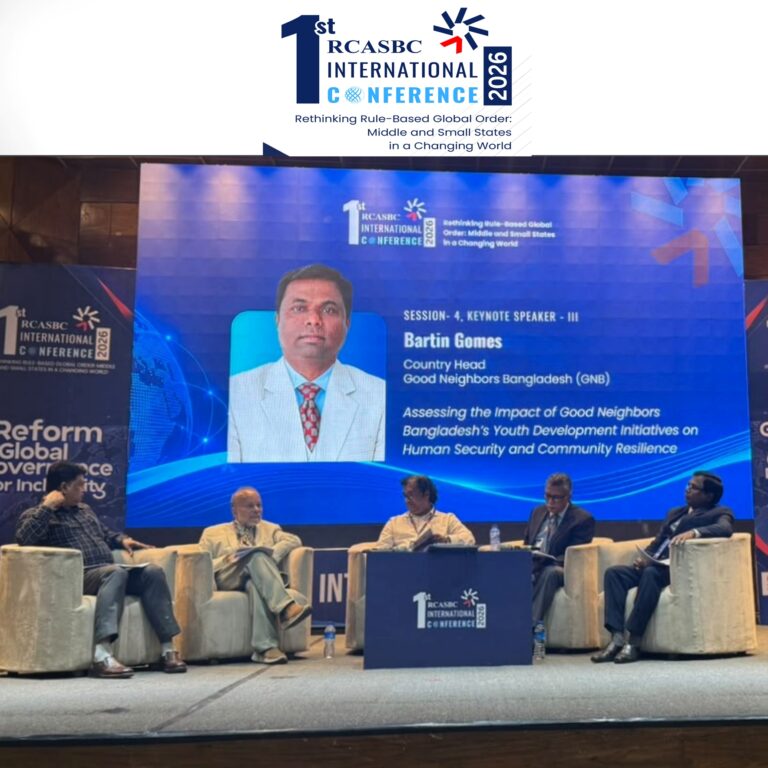
GNB Highlights Youth Development at the 1st RCASBC International Conference 2026
 September 4, 2026
GNB 30 Impact Stories | 2026
 August 15, 2026